
घर वनस्पतींसाठी कारागृह ठरते का? Do homes become a prison for plants?
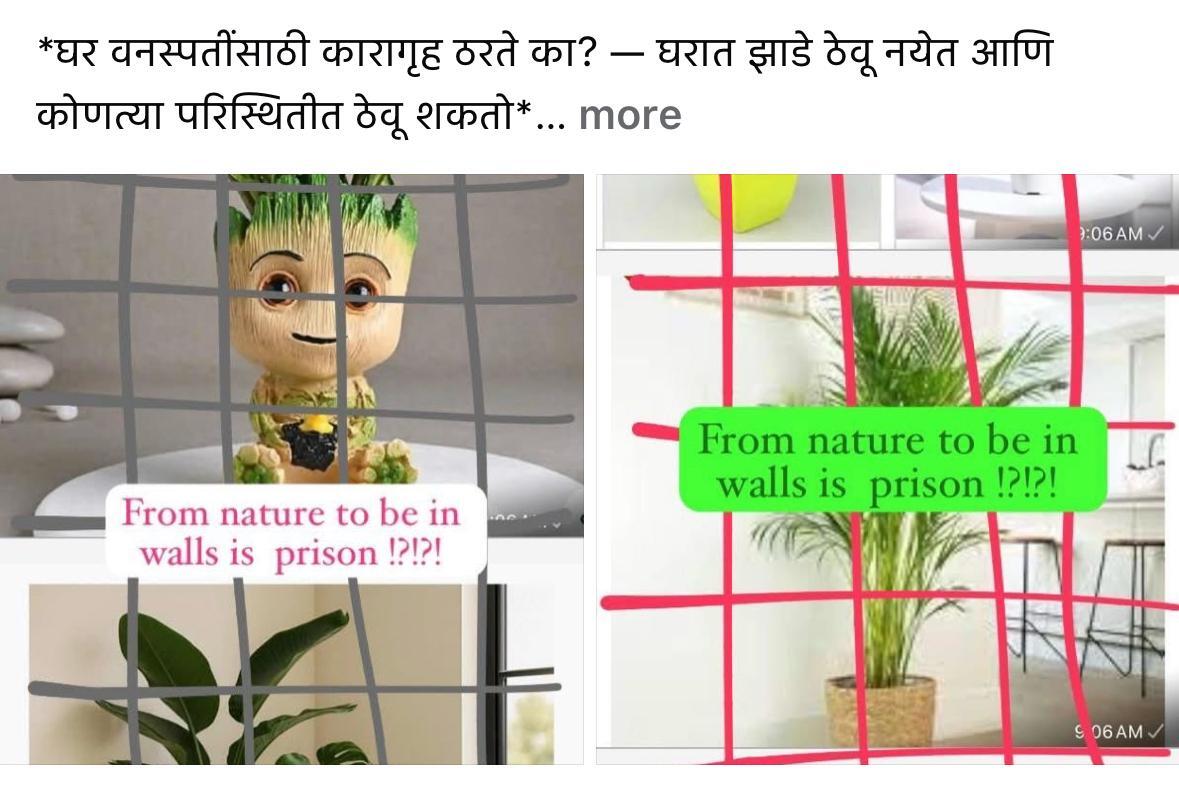
Do homes become a prison for plants?
Why plants should not be kept indoors, and when they can be kept
After living together for so many years, one thought makes me reconsider:
• Flowering plants should not be kept inside the house. When we pluck their flowers, we are interfering with their “offspring,” and this is believed to affect the progress of our own children.
• If permitted, flowering plants should be kept outside—such as in a balcony—but not inside the house.
• Even the non-flowering plants you shared show green patches; these too should not be kept indoors. You have enough space outside.
So why keep these plants inside?
When plants are kept indoors, they receive earth (soil), water, air, and space, but lack the fire element. This deficiency is believed to be “taken” from the family living in the house, affecting wealth, health, and career, and causing unnecessary losses—depending on one’s horoscope, this loss could increase up to 80%.
• Therefore, flowering and regular plants should not be kept indoors unless their height grows taller than the house.
• That is why, in traditional homes, areca nut or coconut trees were only kept if they grew taller than the house.
• If you need fresh flowers daily, it is considered better to use plucked flowers or ones brought from outside.
• Even the holy basil (Tulsi) should not be kept inside the house.
– If Tulsi kept outside dries or burns, it should only be brought back after re-establishing it.
– If there is a Tulsi altar (Vrindavan), it should be placed outside the main entrance or decided according to one’s horoscope.
Conclusion:
• Plants or flowering plants should not be kept inside the house unless:
– There are images of 13 deities on the wall (in that case, keeping one plant is acceptable), or
– You perform daily rituals like homa/agnihotra (then up to 9 plants may be kept).
• Otherwise, plants should be kept in their natural environment. Do not “imprison” them, or in difficult times, you may yourself feel metaphorically trapped.
This same principle applies to keeping animals, birds, aquatic creatures, turtles, fish, or living plants just for visual pleasure or comfort—do not seek happiness by confining them. If someone were to confine you for their comfort, how would that feel?